Do Dogs Like Their Head Rubbed? The Surprising Truth Most Owners Miss (2026)
I learned this the hard way.
Her name was Bella. Rescue mix. Maybe part shepherd, part something else. We met at the shelter on a rainy Tuesday. She was the dog in the back corner, not barking like the others, just watching.
First day home, I did what everyone does. Reached for the top of her head. Gentle. Friendly. The way you’d greet a dog in a movie.
She flinched.
Not a little flinch. A full body recoil. Backed into the wall. Ears flat. Eyes showing too much white.
I pulled my hand back like I’d been burned.
My roommate laughed. “Yeah, don’t do that. She hates it.”
“How was I supposed to know?”
“Most dogs do, actually. You just didn’t know.”
That conversation stuck with me. Five years later, I still think about it. About how many things we do to our dogs because they seem friendly to us, not because they actually are.
do dogs like their head rubbed – if you’re searching this at midnight while your dog sleeps on the couch next to you, I get it. I’ve been there. Let me tell you what I learned.
The Short Answer (With a Complication)
Here’s the thing.
Some dogs like head rubs. Some don’t. Most fall somewhere in the middle, tolerating it from certain people under certain conditions.
But here’s what nobody tells you: why do dogs hate being touched on head for so many of them comes down to basic anatomy and instinct, not personality.
A hand coming down toward their head blocks their vision. It’s looming. It’s unpredictable. From a dog’s perspective, it can feel dominant. Threatening. Even when you mean the opposite.
Think about it from their angle. You’re giant. They’re small. Your hand is the size of their entire face. Coming down from above.
Would you love that?
What Actually Happens When You Reach for Their Head
I started paying attention after the Bella incident.
Watched friends greet their dogs. Watched strangers at the park. Watched my own hands.
dog body language when being petted tells you everything if you know what to look for.
Signs a dog is uncomfortable:
- Head turns away (even slightly)
- Lips lick quickly
- Yawning when not tired
- Eyes show white around the edges (whale eye)
- Body freezes or stiffens
- Moves away after the touch
Signs a dog is enjoying it:
- Leans into your hand
- Relaxed facial muscles
- Soft, blinking eyes
- Returns for more contact
- Loose, wiggly body
Bella showed me three of the discomfort signs immediately. I missed them because I was focused on my intention, not her reaction.
My intention was love. Her experience was something else.
That gap matters.
The Science Behind It (Without the Jargon)
I talked to a behaviorist about this. Dr. Martinez. Works with rescue dogs mostly.
She said something I haven’t forgotten.
“Dogs don’t naturally pat each other on the head. That’s a human thing. We project our greeting style onto them. They don’t speak that language.”
is patting dog on head bad – not inherently. But it’s often misread.
From an evolutionary standpoint, hands coming from above can signal:
- Predators (birds of prey grab from above)
- Dominant animals (higher position = higher rank)
- Unknown threats (can’t see what’s coming)
Dogs greet each other differently. Side approaches. Sniffing. Lower body contact. Not hands descending from overhead.
When you understand this, the flinch makes sense. It’s not rejection. It’s instinct.
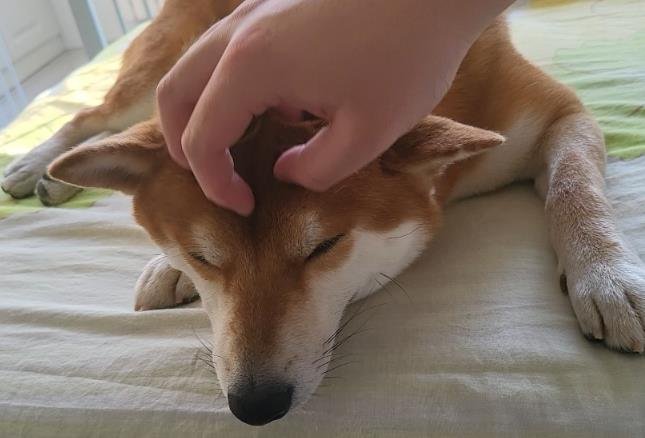
Where Dogs Actually Want to Be Touched
After Bella, I learned to ask differently.
where is the best place to pet a dog – turns out there are spots most dogs prefer.
The chest. Open palm, gentle pressure. Most dogs lean into this one.
The shoulders. Side of the body, not top. Feels less looming.
Behind the ears. Not on top of the head. The base where the ear meets the skull.
Along the back. Side or top, but approached from the side, not above.
Under the chin. Better than overhead. They can see your hand coming.
I tested this with Bella. Chest first. She relaxed. Shoulders next. She leaned in. Head last, weeks later, on her terms. She tolerated it. Never loved it.
That was enough.
safe places to touch a dog isn’t universal. But these spots work for most.
The 5 Clear Signs Your Dog Isn’t Into It
You need to know these. Seriously.
signs dog doesn’t like being petted are subtle if you haven’t learned to look for them.
1. The Head Turn
Not dramatic. Just… away. Your hand is there. Their face is pointed elsewhere. They’re being polite. Listen to the politeness.
2. Lip Licking
Quick tongue flick over the nose. Not because they’re hungry. It’s a calming signal. Translation: “I’m uncomfortable.”
3. The Whale Eye
You’ll see the white around their iris. They’re turning their head but keeping eyes on you. Nervous. Watching for what comes next.
4. Freezing
Body goes still. Not relaxed still. Tense still. Like they’re waiting for something to end.
5. Walking Away
The clearest one. They leave. Don’t call them back. Let them go.
I missed all five with Bella the first week. By week two, I was looking for them. By week three, I was catching them before they escalated.
how to tell if your dog likes being touched – watch what they do after you stop. Do they come back? Or do they shake off and move on?
Shaking off after a touch is often a stress release. Not always. But often.
What I Did Wrong (So You Don’t Have To)
Let me be honest about my mistakes.
Mistake 1: Assuming friendliness meant consent
Bella wagged her tail. I took that as permission for anything. Tail wags mean arousal, not necessarily happiness. Learned that later.
Mistake 2: Ignoring the flinch
First flinch, I should have stopped. Instead I thought, “She’ll get used to it.” She didn’t. She got more careful.
Mistake 3: Testing with other people
Had friends try to pet her head to “see if it was just me.” It wasn’t just me. It was the head touching.
Mistake 4: Rushing the relationship
Wanted her to trust me quickly. Trust doesn’t work on my timeline. Works on hers.
Mistake 5: Not learning dog language first
Spent weeks teaching her commands. Spent zero weeks learning hers. Backwards.
These aren’t small things. They’re the difference between a dog who tolerates you and a dog who trusts you.
How to Approach a Dog Correctly (Step by Step)
This is what works. Not just with Bella. With most dogs.
building trust with dog through touch starts before the touch happens.
Step 1: Ask the owner
Always. Even if the dog looks friendly. You don’t know their history.
Step 2: Let them come to you
Crouch down. Side angle. Don’t reach. Wait. If they approach, you’re invited. If they don’t, you’re not.
Step 3: Offer a closed fist first
Let them sniff. Closed fist is less threatening than open fingers.
Step 4: Start with the chest or shoulder
Not the head. Not yet. Maybe not ever. That’s their choice.
Step 5: Watch what happens next
Do they lean in? Stay still? Move away? Adjust accordingly.
Step 6: Stop before they ask you to
End on a good note. Two or three good touches, then stop. Let them want more.
I use this with every dog now. Rescue dogs. Friend’s dogs. Stranger’s dogs at the park.
It works more often than it doesn’t.
Breed and Personality Differences Matter
Not all dogs respond the same way.
dog sensitive areas to avoid can vary by breed and individual history.
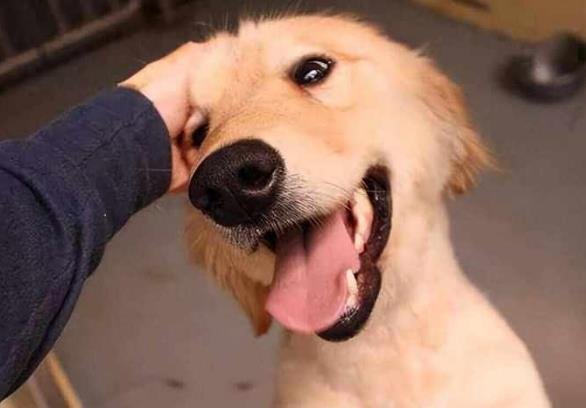
Golden retrievers? Often more tolerant of head touching. Bred for human interaction.
Herding breeds? Often more sensitive. Aware of hand movements. Can interpret them as directing commands.
Rescue dogs with unknown histories? Assume they need more time. Always.
Bella was a rescue. Unknown history. That mattered.
My friend’s golden, Max? Loves head rubs. Gets excited when hands come toward his face.
Both are normal. Both are valid.
dog trust building techniques aren’t one-size-fits-all. You learn the individual dog. Not the breed. Not the generalization. The actual dog in front of you.
Special Cases: Puppies, Seniors, and Rescues
These groups need extra consideration.
Puppies:
More adaptable. Still learning what human hands mean. Good time to establish gentle touch patterns. But don’t overdo it. They need rest too.
Senior dogs:
May have pain or arthritis. Head touching might connect to neck discomfort. Be gentler. Watch for stiffness.
Rescue dogs:
Unknown history. Assume previous hands weren’t always kind. Go slower than you think you need to. Much slower.
Bella was a rescue. Took her four months before she’d voluntarily put her head near my hand. Five months before she’d let me touch the side of her face.
Never the top. Always the side.
That was fine.
What Changed Between Bella and Me
It took time.
First month: I stopped reaching for her head entirely. Chest and shoulders only. She relaxed noticeably within two weeks.
Second month: I started letting her initiate. If she wanted head contact, she’d lean toward my hand. Rare. But it happened.
Third month: I introduced the side-of-face touch. Slow. Predictable. She could see my hand coming every time.
Fourth month: She started seeking contact. Not for head rubs. For chest scratches. For shoulder pressure. For presence.
Fifth month: I realized I didn’t need her to like head rubs. I needed her to feel safe. That was the actual goal.
how long should you crate train a dog – wait, wrong article. But the principle is similar. There’s no deadline. There’s just the dog’s timeline.
Six months in, Bella would rest her head on my leg sometimes. Voluntarily. That meant more than any head rub ever could.
The Question Nobody Asks: Why Does It Matter?
Here’s what I think.
It matters because consent matters. Even with dogs.
They can’t tell us no with words. So they tell us with bodies. With distance. With flinches. With whale eyes and lip licks and head turns.
We can learn to listen. Or we can keep assuming we know better.
building trust with dog through touch isn’t about getting them to accept what we want. It’s about learning what they need.
Sometimes that means no head rubs.
Sometimes that means no touching at all for a while.
Sometimes that means letting them come to you instead of you going to them.
It’s slower. Less satisfying in the moment. But the relationship you build is real. Not performative.
What I Do Now (Five Years Later)
Bella passed last year. Twelve years old. Good life. Good ending.
I have a new dog now. Finn. Border collie mix. Different personality. Different history.
I did the same thing. Didn’t assume. Watched. Learned.
Finn likes head scratches. Actually seeks them out. Rubs his face against my hand when he wants more.
I still don’t start there. I start with the chest. Let him tell me what he wants next.
Some days that’s head contact. Some days it’s not.
I follow his lead.
do dogs like their head rubbed – some do. Some don’t. The question isn’t really the point.
The point is: does your dog?
And are you paying attention to the answer?
If You Take Nothing Else From This
Take this.
Your dog will tell you what they like. Consistently. Clearly. If you watch.
They’re not trying to be difficult. They’re trying to communicate.
Head rubs aren’t inherently bad. But they’re not inherently good either. They’re neutral. What matters is what your specific dog thinks about them.
where is the best place to pet a dog – the place they lean into. The place they return to. The place they relax at.
For some dogs, that includes the head.
For many, it doesn’t.
For all of them, it’s worth finding out.
One Last Thing
Someone asked me at the dog park last week if I minded them petting Finn’s head.
I said, “Ask him.”
They looked confused.
I pointed. Finn was leaning against my leg, chest forward, head turned toward their hand but body relaxed.
“He’s saying yes right now. But check again next time. He might not always feel the same.”
They petted his chest first. Then, when he leaned in, touched the side of his face.
Finn wagged. They smiled.
That’s the whole thing, honestly.
Not rules. Not absolutes. Just attention.
Pay attention. Your dog is talking.