why does my dog stare at me,Begging or Bonding? 6 Real Reasons Your Dog Stares While You Eat
Let me tell you about the time I tried to eat a sandwich in peace.
I’d had one of those days. You know the kind. Everything went wrong. All I wanted was ten minutes at the kitchen table with my turkey sandwich and a bag of chips. Just me. Quiet. No demands.
Cooper had other plans.
He sat approximately three feet from my chair. Not begging. Not whining. Just… staring. Those brown eyes locked on me like I was performing some kind of fascinating one-dog show. Every bite I took, his head tilted slightly. Every crumb that fell, his attention followed it like a hawk tracking prey.
I lasted four minutes before I gave him half my sandwich.
Not because I wanted to. Because I couldn’t handle the emotional weight of those eyes anymore.
If you’re reading this, you know exactly what I’m talking about. That stare. The one that makes you feel guilty for eating in your own house. The one that somehow communicates an entire novel’s worth of longing without a single sound.
I used to think it was just begging. Turns out, it’s… more complicated than that.
So I did what any slightly-obsessed dog parent would do. I researched. I talked to my vet. I asked around. And I paid way too much attention to Cooper’s staring habits for what any reasonable person would consider normal.
Here’s what I learned.
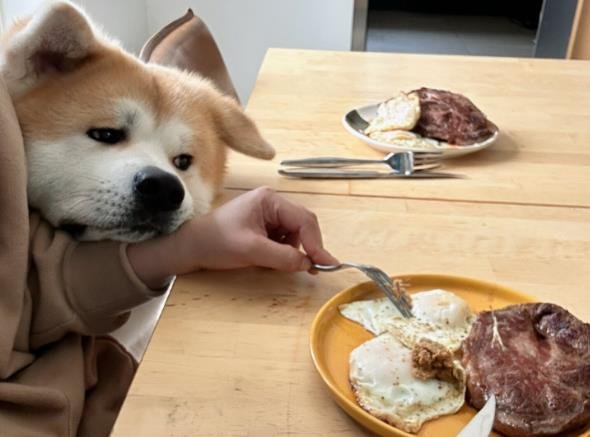
Reason 1: It’s Basically Instinct (Thanks, Wolves)
Okay, stay with me here. We’re going back like thirty thousand years.
Your dog’s ancestors? They hung around human campsites waiting for scraps. The ones who were good at reading human behavior got fed. The ones who weren’t… well, they didn’t pass on their genes as successfully.
Fast forward to now. Cooper doesn’t know he’s not a wolf. His brain still has that wiring. When you eat, his instinct says “this is when food becomes available. Pay attention.”
My vet put it this way: “You’re not eating a meal. You’re conducting a food distribution ceremony, and he’s waiting for his portion.”
Sounds dramatic. But have you SEEN how dogs watch us eat? It’s not casual interest. It’s surveillance.
What this looks like:
- Intense focus on your food specifically
- Follows you if you move to a different room
- Gets more alert when you open the fridge or cabinets
- Position themselves where they can see your plate
Is it fixable? Not really. This is hardwired. But you can manage it (more on that later).
Reason 2: They’re Actually Bonding With You
This one caught me off guard.
I always assumed the stare was about the food. Sometimes it is. But sometimes? It’s about connection.
Dogs release oxytocin when they make eye contact with their humans. Same hormone that bonds parents with babies. When Cooper watches me eat, he’s not always thinking “give me that.” Sometimes he’s just… being with me.
Think about it. Mealtime is when you’re stationary. Present. Not rushing around. For a dog, that’s prime bonding opportunity.
I noticed this with Cooper because his stare changes depending on what’s happening. When I’m eating something he loves? Intense. Focused. Almost vibrating with anticipation. When I’m eating something he doesn’t care about? Softer. Relaxed. Sometimes he’ll rest his chin on my knee and just… watch.
Different stare. Different motivation.
What bonding stares look like:
- Softer eyes, not intense
- Relaxed body language
- May sigh or settle in rather than pace
- Continues even when there’s no food smell
- Often accompanied by physical contact (leaning, head on knee)
This one doesn’t need fixing. It’s actually kind of sweet.
Reason 3: You Accidentally Trained Them To
Here’s where I need to confess something.
Cooper stares at me while I eat because I taught him to.
Not on purpose. Never intentionally. But every time he gave me those eyes, every time he made that little whine, every time he looked pathetic enough… I gave him food.
Maybe it was a bite of chicken. Maybe it was the crust I wasn’t going to eat anyway. Maybe it was just one chip.
One chip turns into a pattern. A pattern turns into expectation. Expectation turns into “why is my dog staring at me while eating” Google searches at midnight.
I’m not the only one who does this. Eighty percent of dog owners I talked to admitted they occasionally feed their dogs from their plate. We’re all enabling each other.
Signs you’ve trained this behavior:
- Staring started after you began sharing food
- Gets worse when you occasionally give in
- Knows exactly which foods are worth staring for
- Stops if you never, ever share (but who can resist?)
The hard truth: The only way to undo this is to stop completely. Every time. Forever. Which is… challenging.
Reason 4: They’re Checking If You’re Okay
This one genuinely made me emotional when I learned it.
Dogs watch their humans for cues about safety. It’s pack behavior. In the wild, if the leader is eating calmly, everything is fine. If the leader is stressed or alert, there might be danger.
Your dog isn’t just watching your food. They’re watching YOU.
I started noticing this during stressful periods. When I was anxious about work, Cooper’s stare was different. More vigilant. Less about food, more about monitoring my state. When I was relaxed? His stare was relaxed too.
He wasn’t begging. He was… checking in.
What protective/monitoring stares look like:
- Watches your face more than your food
- Body language mirrors your energy
- May position themselves between you and the door
- Less interested in the actual food
- Continues after you finish eating
If your dog does this, they’re not being pushy. They’re being loyal. There’s a difference.
Reason 5: They’re Bored (And You’re Entertainment)
Let’s be honest.
Your life is more interesting than your dog’s life.
You move around. You open things. You make food appear from nowhere. You have opposable thumbs and can open jars. You’re basically a magician from their perspective.
When you sit down to eat, that’s peak entertainment time. Better than TV. Better than toys. You’re right there, doing fascinating human things with fascinating human food.
Cooper’s stare during my meals is sometimes just… boredom management. He’s learned that watching me eat is a reliable source of stimulation.
Signs it’s boredom:
- Stares at you during other activities too
- Seems generally understimulated
- More focused on your movements than food
- Will accept attention instead of food
- Increases when routine is monotonous
The fix: More enrichment. More activities. More things to do that don’t involve watching you chew.
Reason 6: Something Might Actually Be Wrong
I need to include this because it matters.
Most staring is normal. But sometimes? It signals a problem.
Sudden increase in staring behavior. Staring combined with other changes. Staring that seems anxious rather than curious. These can indicate underlying issues.
When to pay attention:
- Staring started suddenly with no history of the behavior
- Accompanied by weight loss or appetite changes
- Dog seems restless or uncomfortable
- Other behavioral changes happening simultaneously
- Staring seems frantic rather than calm
Possible underlying issues:
- Hunger (are they getting enough food?)
- Nutritional deficiency
- Anxiety disorder
- Medical issues affecting appetite
- Cognitive changes (especially in older dogs)
I’m not a vet. But if something feels off, trust that instinct. Call your vet. Better to check and be fine than ignore and regret it.
Cooper had a phase where his staring got intense. Turned out his food wasn’t meeting his nutritional needs anymore. Switched brands. Problem solved. Sometimes it’s that simple.
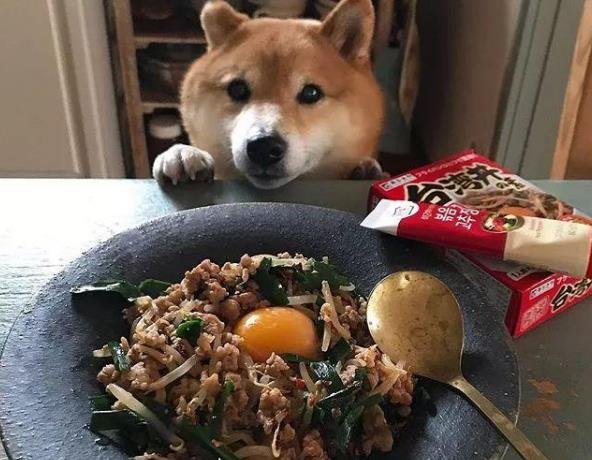
When Is Dog Staring During Meals a Problem?
Here’s the thing nobody tells you clearly.
Some staring is fine. Some staring needs addressing. The line between them is… fuzzy.
Normal staring:
- Calm body language
- Stops when you’re done eating
- No whining or barking
- Dog seems relaxed overall
- Behavior has been consistent over time
Problematic staring:
- Intense, fixed gaze that seems obsessive
- Whining, barking, pawing at you
- Dog becomes agitated if ignored
- Interferes with your ability to eat
- Escalating over time
- Signs of resource guarding developing
The difference matters because it changes how you respond.
How to Stop Dog From Staring at Food (Without Being Cruel)
I’ve tried a lot of things. Some worked. Some didn’t. Some made things worse before they got better.
What worked for us:
1. Feed them before you eat
Sounds obvious. I didn’t do it consistently for months. A tired, full dog is less interested in your sandwich.
2. Create a designated spot
Cooper has a mat in the corner of the kitchen. When I eat, he goes to his mat. Gets a chew toy. Different room, different activity. Took about three weeks to stick.
3. Never, ever give in
This is the hard one. Once you decide no sharing, you have to commit. One slip resets the clock. I failed this approximately seven times before finally getting serious.
4. Ignore the stare completely
No eye contact. No talking. No “stop looking at me” comments. Any attention reinforces the behavior. I put on sunglasses inside my own house for two weeks. Worth it.
5. Reward alternative behaviors
When Cooper lies on his mat instead of staring? Treat. When he plays with his toy during my meal? Treat. You’re teaching them what TO do, not just what not to do.
What didn’t work:
- Yelling “stop staring” (now staring = attention)
- Pushing them away (now it’s a game)
- Inconsistent rules (confusing and counterproductive)
- Punishment (creates anxiety, doesn’t solve the behavior)
Should I Feed My Dog When They Stare?
The short answer: No.
The longer answer: It depends on what you’re training.
If you want a dog who doesn’t stare during meals, don’t feed them during meals. The connection is too strong.
If you’re okay with some staring and occasional sharing, set clear rules. Maybe they get one small thing. Maybe only certain foods. Maybe only on weekends.
The problem isn’t sharing. The problem is inconsistency.
Cooper’s current arrangement: He gets his own dinner before I eat mine. Occasionally, if he’s been particularly good, he gets one small treat from my plate. But it’s not expected. It’s not demanded. It’s a bonus, not a right.
Took months to establish. Still slips sometimes. But it works for us.
Training Tips That Actually Stick
I’m going to be real about training.
It’s boring. It takes forever. You’ll want to quit. Your dog will test you. You’ll have good days and bad days.
That’s normal.
Week 1-2: Establish the new routine. Feed dog first. Create their spot. Expect resistance.
Week 3-4: Consistency phase. Don’t give in even once. This is where most people fail.
Week 5-8: Behavior starts shifting. Dog learns the new normal. Still needs reinforcement.
Month 3+: Maintenance. Occasional slip-ups will happen. Get back on track quickly.
Pro tips:
- Train when you’re not hungry (everything is harder when you’re hangry)
- Have high-value treats ready for rewarding good behavior
- Keep sessions short (15 minutes max)
- End on a positive note
- Track progress somehow (journal, photos, whatever works)
I took photos of Cooper each week during training. Looking back at them now, I can actually see the change in his body language. Week one: tense, focused on me. Week eight: relaxed, focused on his toy.
Progress is real. It’s just slow.
What I’d Do Differently Starting Over
Looking back at Cooper’s staring saga, here’s what I’d change:
I’d start training sooner. Waited too long thinking he’d outgrow it. He didn’t.
I’d be consistent from day one. My early inconsistency made the behavior harder to change later.
I’d understand the WHY sooner. Knowing it wasn’t just begging helped me respond more appropriately.
I’d involve my family. Everyone needs to follow the same rules. My partner kept slipping Cooper food. Undermined everything.
I’d be kinder to myself. Some days were hard. I beat myself up about it. Not necessary. We figured it out eventually.
The Thing About Dog Eye Contact
Here’s what I didn’t expect to learn through all this.
Eye contact with your dog is… meaningful.
Not the staring-during-meals kind. But the intentional, present, I-see-you kind.
Cooper and I have a thing now. Before I eat, we do a quick check-in. I look at him. He looks at me. Sometimes I scratch his ears. Sometimes I just say his name. Then I eat, he goes to his mat.
It takes ten seconds. But it acknowledges him. Lets him know I see him. That he’s not being ignored, just asked to wait.
That small ritual changed everything.
The staring decreased. Not because I trained it out completely. But because his need for connection was being met in a different way.
Sometimes the solution isn’t stopping a behavior. It’s understanding what the behavior is asking for.
If You’re Reading This Mid-Meal
I see you.
Your dog is staring at you right now. You’re trying to eat. You’re feeling guilty. You’re wondering if you should just give them the bite you’re holding.
Here’s what I’d say:
Take a breath. You’re not a bad pet parent for eating your food. You’re not cruel for having boundaries. You’re not ignoring your dog’s needs by finishing your meal first.
Set a boundary if you need to. Or share if that’s your choice. Either way, do it intentionally. Not because you’re being manipulated by puppy eyes. Because you’re making a conscious decision.
And tomorrow? Maybe try feeding them first. Maybe set up their spot. Maybe start the training you’ve been putting off.
Or maybe just enjoy your sandwich while they watch. Some battles aren’t worth fighting. Some stares are just love in dog form.
You’ll figure out what works for your house.
One More Thing
Someone asked me recently if Cooper still stares when I eat.
Yes. Of course he does.
Less than before. Different quality to it. Sometimes it’s the old begging stare (usually when I have cheese). Sometimes it’s the soft bonding stare (usually when I’m tired and eating quietly).
I don’t mind anymore.
It took me a while to get here. To understand that the stare wasn’t a problem to solve. It was communication to decode.
Some days I share. Some days I don’t. We both know the rules. We both know we’re loved.
That’s the whole thing, really.
Not perfect behavior. Not flawless training. Just two beings figuring out how to exist together.
Your dog is staring at you because you matter to them.
However you handle it, handle it with that in mind.
Last updated: March 2026
This article reflects personal experience and research, not professional veterinary advice
Always consult your veterinarian or behaviorist for persistent behavioral concerns
Your dog is different. Your situation is different. That’s okay.
Some links may be affiliate links for products I actually use