Dog Body Language Explained: How to Read Your Dog’s Signals (2026)
I need to tell you about the park incident.
It was a Saturday. Sunny. Cooper was four. We’d been going to this specific dog park for months. He loved it. I thought we had the routine down.
Then I saw it.
A golden retriever bounding toward us. Tail wagging hard. Mouth open. Looked happy, right? That’s what everyone thinks.
Cooper froze. Not a playful freeze. A stiff, statue-like freeze. His ears went back—not relaxed, but pinned flat. He did that thing where he licks his lips really fast. Once. Twice. Three times.
The owner of the golden retriever laughed. “Look, he’s so excited! He loves your dog!”
She let her dog keep coming.
Cooper didn’t bark. He didn’t growl. He just snapped. One quick air snap. The golden retriever jumped back, startled. The owner got mad. Called Cooper aggressive. Said he was “mean.”
We left. I felt sick.
Not because Cooper was mean. He wasn’t. He was screaming. In the only language he had. And nobody—including me, in that split second—was listening fast enough.
dog body language – I thought I knew it. I knew the basics. Wagging tail means happy. Bared teeth means angry. Simple.
But it’s not simple. It never is.
That day changed how I watch dogs. Forever.
Let me tell you what I actually learned. The messy, real version.
⚠️ Before We Start Reading Signals
I’m not a behaviorist. I’m not a trainer with twenty years of experience.
I’m a dog owner who misread his own dog. And I’ve seen other people do it too. Constantly.
This is information. Not a diagnosis.
If your dog is showing signs of aggression, extreme fear, or sudden behavior changes, stop reading articles. Call a professional. A certified behaviorist. Not a random person on Instagram.
Context matters. Your dog’s history matters. Their breed matters.
Okay. Now that we’re clear…
The Biggest Lie We Tell Ourselves
Here’s the thing that took me years to unlearn.
“A wagging tail means a happy dog.”
Say it with me: False.
dog tail wagging meaning is complicated. So complicated.
A loose, wide wag that moves the whole butt? Yeah, that’s usually happy. That’s Cooper when I come home from work. Whole-body wiggle. Can’t stand still.
But a high, stiff tail vibrating back and forth? That’s arousal. Could be excitement. Could be aggression. Could be “I’m about to lose my mind.”
A low, tucked tail wagging slightly? That’s fear. Anxiety. “Please don’t hurt me.”
I used to see a wagging tail and think “friendly.” Now I look at the rest of the body. Always.
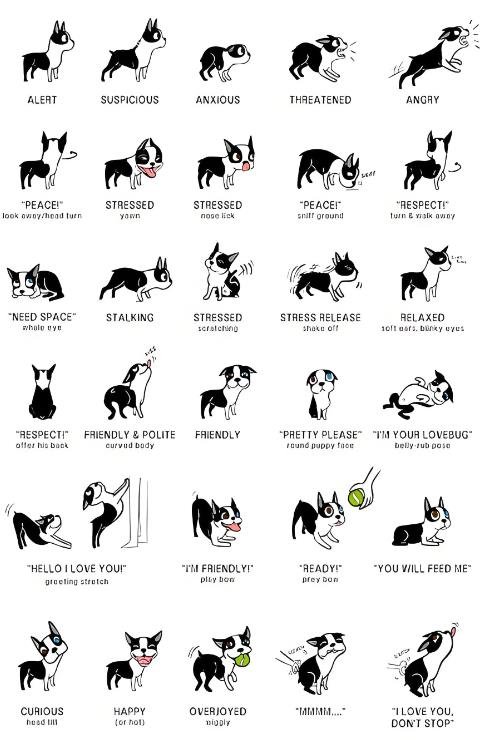
understanding dog body language starts here. Stop isolating one signal. Look at the whole picture.
The Cluster Rule (What Saved Us)
My trainer told me this after the park incident.
“Never read one signal,” she said. “Read the cluster.”
reading dog signals isn’t about spotting a single ear flick or a lip lick. It’s about seeing the pattern.
Example 1: The Happy Cluster
- Loose, wiggly body
- Soft, squinty eyes
- Open mouth (looks like a smile)
- Ears in natural position
- Play bow (front down, butt up)
Example 2: The Stressed Cluster
- Stiff, frozen posture
- Whale eye (showing whites of eyes)
- Lip licking or yawning (when not tired)
- Ears pinned back
- Tail tucked or stiff
Example 3: The Warning Cluster
- Hard stare
- Closed mouth
- Weight forward
- Raised hackles
- Low growl (or silence, which is scarier)
Cooper at the park showed me the stressed cluster. I missed it because I was looking only at the other dog’s tail.
is my dog happy or scared – ask yourself this every time. Look for the cluster. Not the single move.
Eyes: The Window Everyone Misreads
Let’s talk about eyes.
dog whale eye meaning – this one is critical. You need to know this.
Whale eye is when you see the whites of the dog’s eyes. Not just a little. A lot. Like a crescent moon of white.
It happens when a dog turns their head away but keeps looking at something. Or when they feel trapped.
I see this at vet clinics all the time. Owner holding the dog down. Dog turning head away, eyes rolling back. Owner says, “He’s just being dramatic.”
No. He’s saying, “I am uncomfortable. I might bite if this doesn’t stop.”
Direct staring is another big one.
In human language, eye contact means connection. In dog language, a hard, direct stare is a challenge. A threat.
If a strange dog locks eyes with Cooper and doesn’t blink? We’re leaving. Immediately.
Soft eyes, on the other hand? Squinty. Relaxed. Blinking normally. That’s safety. That’s trust.
what is my dog thinking when they look at you? If the eyes are soft, they’re probably feeling safe. If they’re hard or showing whale eye? They’re stressed. Listen to them.
Ears: Not Just Up or Down
Ears are tricky because breeds differ.
A German Shepherd’s ears tell a different story than a Cocker Spaniel’s. One stands up; one hangs down.
But the movement matters more than the position.
dog ear positions meaning:
Forward/Perked:
Attention. Focus. Could be curiosity. Could be intensity. Check the rest of the body. If the body is stiff, it’s not friendly curiosity.
Pinned Back/Flat:
Fear. Submission. Anxiety.
I see this when Cooper meets a pushy dog. Ears go flat against the head. He’s saying, “I’m not a threat. Please back off.”
Relaxed/Natural:
Neutral. Chilling out. No big emotions happening.
One Up, One Down:
Confusion. Uncertainty. “I’m not sure what’s happening here.”
Don’t just glance. Watch the change. Did the ears go from natural to pinned in two seconds? Something triggered stress. Find out what.
Mouth & Face: The Subtle Stuff
This is where most people get it wrong.
lip licking dog meaning – it’s not always “I want food.”
Actually, it’s rarely about food in social situations.
Fast tongue flicks? Licking the nose repeatedly? That’s a calming signal. A stress signal. “I’m nervous. I’m trying to calm myself down.”
I used to think Cooper was just hungry when we had guests over. He’d lick his lips constantly. Turns out he was overwhelmed. Too many people. Too much noise.
Yawning is another big one.
Dog yawns when tired? Sure.
Dog yawns when you’re hugging them tight? That’s stress.
Dog yawns at the vet? Stress.
Dog yawns when you’re yelling? Major stress.
panting when not hot – same deal. If it’s 60 degrees and your dog is panting heavily, check the environment. Are they anxious? Overstimulated?
Showing teeth isn’t always aggression either.
Some dogs do a “submissive grin.” Lips pulled back, teeth showing, but body is wiggly and low. It looks weird. But it’s appeasement. “I’m friendly! See my teeth? Please like me!”
Contrast that with a snarl. Lips curled up, nose wrinkled, body stiff, maybe a growl. That’s a warning. Big difference.
happy dog signs include a relaxed, open mouth. Tongue might loll out. Corners of the mouth pulled back slightly. Looks like a smile because it basically is.
Body Posture: The Whole Story
You can’t read a face without reading the body.
stiff dog body meaning is straightforward: Tension.
A happy dog is loose. Floppy. Wiggle-worm energy.
A stressed or aggressive dog is rigid. Like a board.
Weight distribution tells you everything.
Weight Forward:
Confidence. Potential aggression. “I’m coming at you.”
If a dog is leaning forward with a hard stare, give them space.
Weight Back:
Uncertainty. Fear. “I might run.”
If a dog is crouched, weight on hind legs, they’re preparing to flee. Or snap if cornered.
Play bow dog meaning – this is the universal sign for “Let’s have fun!”
Front elbows down, butt in the air. Tail wagging. Bouncy movement.
It’s an invitation. “Everything I do next is a game. Don’t take it seriously.”
But watch closely. Sometimes a bully dog uses a play bow to lure another dog in, then attacks. Context again. Is the other dog having fun? Or are they trying to escape?
Hackles raised (the hair on the back standing up) gets a bad rap.
People think it means aggression. Not necessarily.
It means arousal. High emotion. Could be fear. Could be excitement. Could be aggression.
It’s like our goosebumps. An involuntary reaction to intensity.
Don’t see hackles and immediately assume “dangerous.” Assume “high emotion” and assess the situation.
The Calming Signals Nobody Talks About
Turid Rugaas wrote about these years ago. calming signals dogs use to de-escalate tension.
Most owners miss them completely.
Turning the head away:
Dog A approaches. Dog B turns their head to the side. Not ignoring. Saying, “I mean no harm. Let’s calm down.”
Sniffing the ground suddenly:
Walking along. Something scary appears. Dog stops and sniffs the grass intensely. Out of nowhere.
It’s not curiosity. It’s a displacement activity. “I’m stressed. Sniffing makes me feel better.”
Moving in slow motion:
Everything slows down. Steps become deliberate. Head lowers.
“I’m not a threat. See how slow I am?”
Shaking off:
Like they’re wet, but they’re dry.
Stress release. “That was intense. Let me shake it off.”
I see these at the dog park every day. One dog does a head turn. The other ignores it and keeps pushing. Then the first dog snaps.
The second owner says, “He came out of nowhere!”
No. He signaled three times. You didn’t listen.
signs of stress in dogs are often these quiet, subtle moves. Not the barking. Not the growling. The quiet stuff happens first.
Aggression: The Ladder You Need to Know
Aggression doesn’t just happen. It escalates.
There’s a ladder. aggressive dog body language climbs it step by step.
Step 1: Subtle Stress
Lip licking. Yawning. Looking away.
Response needed: Remove the stressor. Give space.
Step 2: Increased Tension
Stiff body. Hard stare. Ears pinned.
Response needed: Immediate intervention. Create distance.
Step 3: Warning
Low growl. Curling lip. Snap in the air.
Response needed: BACK OFF. This is the last warning before a bite.
Step 4: Bite
Contact made.
Response needed: Medical attention. Behavior assessment.
Here’s the tragedy: Most people punish the growl.
“Bad dog! Don’t growl!”
So the dog learns: Growling gets me in trouble. I won’t growl next time.
Next time, they skip the warning. They go straight to the bite.
A growling dog is a communicating dog. They’re telling you they’re at their limit. Thank them for the warning. Fix the problem. Don’t punish the message.
dog showing teeth meaning in this context is a clear red flag. Do not ignore it. Do not try to “dominate” them. Respect the boundary.
Real Scenarios: Where I See People Mess Up
Let’s get practical.
Scenario 1: The Hug
You love your dog. You wrap your arms around them. Tight.
Dog freezes. Whale eye. Lip lick. Yawn.
You say, “Aww, he loves hugs!”
No. He’s tolerating it. Maybe hating it.
Better approach: Pet the chest. Side. Let them lean in if they want.
Scenario 2: The Park Greeting
Two dogs meet. Owners let them run straight at each other. Face to face.
Direct approach. High pressure.
One dog gets stiff. Other keeps coming. Snap. Fight.
Better approach: Parallel walking. Let them sniff butts (safe zone) without face-to-face pressure.
Scenario 3: The Sleeping Dog
Kid wakes the dog up by poking.
Dog startles. Growls.
Parent yells, “Bad dog! Never growl at the kid!”
Better approach: Teach kids not to touch sleeping dogs. Respect the startle reflex.
interpreting dog behavior in real-time saves relationships. And bites.
Breed Differences Matter
I have to mention this.
A Greyhound’s “relaxed” looks different from a Pug’s “relaxed.”
A Husky talks (vocally) more than a Basenji.
A Bulldog’s resting face looks grumpy even when they’re happy.
dog communication tips must account for breed.
Don’t judge a Bulldog’s face as angry just because of their wrinkles.
Don’t assume a Greyhound tucking their tail is terrified; some tuck slightly when running or focusing.
Learn your dog’s baseline. What’s normal for them?
Then spot the deviations.
How I Changed My Walks With Cooper
After the park incident, I changed everything.
Before:
I’d let Cooper greet every dog. Head-on.
I’d let kids pet him whenever they wanted.
I’d pull him closer when I felt nervous.
Now:
I scan ahead. See a dog coming? I assess.
Is the other dog loose and wiggly? Maybe a greeting.
Is the other dog stiff and staring? We cross the street.
I teach Cooper “Let’s Go.” U-turn. Move away.
It’s not anti-social. It’s protective.
When people ask to pet him, I watch Cooper.
If he leans in? Yes.
If he freezes or looks away? “Sorry, he’s taking a break.”
dog body language isn’t just about understanding. It’s about advocacy.
Cooper can’t speak English. I have to speak for him.
The “Guilty” Look Myth
One more thing.
The “guilty” look. You know the one.
You come home. Trash can overturned. Dog is crouching. Ears back. Whale eye. Looking away.
We say, “He knows he did something wrong! He feels guilty!”
Science says: No.
That’s not guilt. That’s fear of your reaction.
They’re reading your body language. You’re angry. Your voice is sharp. Your posture is tense.
They’re showing appeasement signals. “Please don’t hurt me. I’m sorry you’re mad.”
They don’t connect the trash from three hours ago with your anger now.
They just know: Human is mad. I need to look small.
Stop punishing the “guilty” look. It’s not remorse. It’s panic.
What To Do When You See Stress Signals
Okay, you see the cluster. Lip licking. Whale eye. Stiff body.
Now what?
1. Stop the trigger.
Whatever is causing it, make it stop. Move away. Ask the other person to back off.
2. Don’t comfort excessively.
Coddling (“It’s okay, baby, shhh”) can sometimes reinforce the fear state. Just be calm. Neutral. Confident.
3. Give space.
Create a buffer zone. Let the dog breathe.
4. Redirect if possible.
If the stress is mild, ask for a simple command. “Sit.” “Look at me.” Break the focus on the stressor.
5. Leave if needed.
If the signals escalate, leave. No shame in leaving. Better to leave early than deal with a bite later.
how to tell if dog food is working? Wait, wrong article.
how to tell if your intervention worked?
Watch the body relax. Soft eyes. Normal breathing. Shake off. Resuming normal activity.
That’s success.
Teaching Kids to Read Dogs
This is crucial.
Kids get bitten more than adults. Often because they misread signals. Or because they ignore them.
Teach them:
- Don’t hug tight.
- Don’t stare in the eyes.
- If the dog walks away, let them go.
- If the dog licks lips or yawns, stop what you’re doing.
- Ask permission before petting. Always.
child safety with dogs depends on this.
Make it a game. “Can you spot the happy tail?” “Oh look, his ears went back. He needs space.”
Empower them with knowledge. Not fear.
When to Call a Professional
I’ve talked a lot about reading signals.
But sometimes, it’s not enough.
Call a pro if:
- Your dog bites without warning (or skips the warning ladder).
- Your dog shows extreme fear (panicking, unable to settle).
- Aggression is escalating despite your management.
- You feel unsafe in your own home.
dog behaviorist near me – search for certified ones. CBCC-KA, CAAB, IAABC.
Not just anyone with a title. Real credentials.
There’s no shame in help.
I consulted a behaviorist after the park incident. Best money I ever spent.
Taught me what I couldn’t learn from Google.
Final Thoughts: Listening to the Silence
Dogs are loud in their silence.
They tell us everything. Every day.
Through a twitch of an ear. A shift of weight. A quick lick of the nose.
We just have to listen.
reading and understanding your dog’s body language isn’t about becoming an expert overnight.
It’s about paying attention.
Slowing down.
Watching.
Cooper and I are better now.
We have a rhythm. A language.
I catch his stress earlier. He trusts me to handle it.
Our walks are calmer. Our home is safer.
It’s not perfect. We still mess up sometimes.
But we’re listening.
And that makes all the difference.
Last updated: March 2026
This article reflects personal experience and research, not professional veterinary or behaviorist advice
Always consult a certified professional for serious behavior issues
Individual dogs vary significantly. Breed, history, and context influence all signals
Safety first: If in doubt, give space and seek help